Introduction
As humans, we’re naturally drawn to the eyes.
Eye contact is powerful for us. It signals emotion, intention, connection, even threat. We’re wired to read faces first.
But when it comes to dogs, that instinct can mislead you.
If you want to truly understand your dog’s emotional state, don’t start with the eyes.
Start with the tail.
Then the mouth.
Then the ears.
And only then — consider the eyes.
Let’s break down why.
Why Humans Misread Dogs
We interpret the world through human social rules.
Wide eyes = fear or surprise.
Direct stare = confidence or confrontation.
Soft eyes = affection.
But dogs don’t communicate primarily through facial expression the way we do.
Their communication is full-body.
If you react too quickly to what you think the eyes are telling you, you might completely misread the situation.

The Right Process
Step One: Look at the Tail First
Your dog’s tail is often the clearest indicator of their immediate emotional state.
Before you react to anything else, ask:
Is the tail high and stiff?
Is it low and tucked?
Is it loose and flowing?
Is it wagging slowly or rapidly?
Is the wag tight and rigid, or relaxed and sweeping?
A wagging tail does not automatically mean a happy dog.
A high, tight wag can indicate alertness or tension.
A low, soft wag can signal uncertainty.
A neutral, relaxed tail usually suggests balance.
The tail tells you about arousal level before the face ever will.
Step Two: Observe the Mouth
Next, look at the mouth.
The mouth often reflects stress levels more clearly than the eyes.
Ask yourself:
Is the mouth relaxed and slightly open?
Are the lips tight?
Is there excessive panting unrelated to heat?
Is the dog licking their lips repeatedly?
Are teeth slightly exposed in tension?
A relaxed mouth usually means a relaxed dog.
A tight mouth often signals discomfort or uncertainty.
Subtle lip licking or yawning in certain contexts can indicate stress — not tiredness.
Step Three: Check the Ears
Ears are emotional radar dishes.
Forward-facing ears can mean curiosity or alertness.
Pinned-back ears may indicate fear or appeasement.
Neutral ears often suggest calm engagement.
But ears should always be read in combination with the tail and mouth, never in isolation.

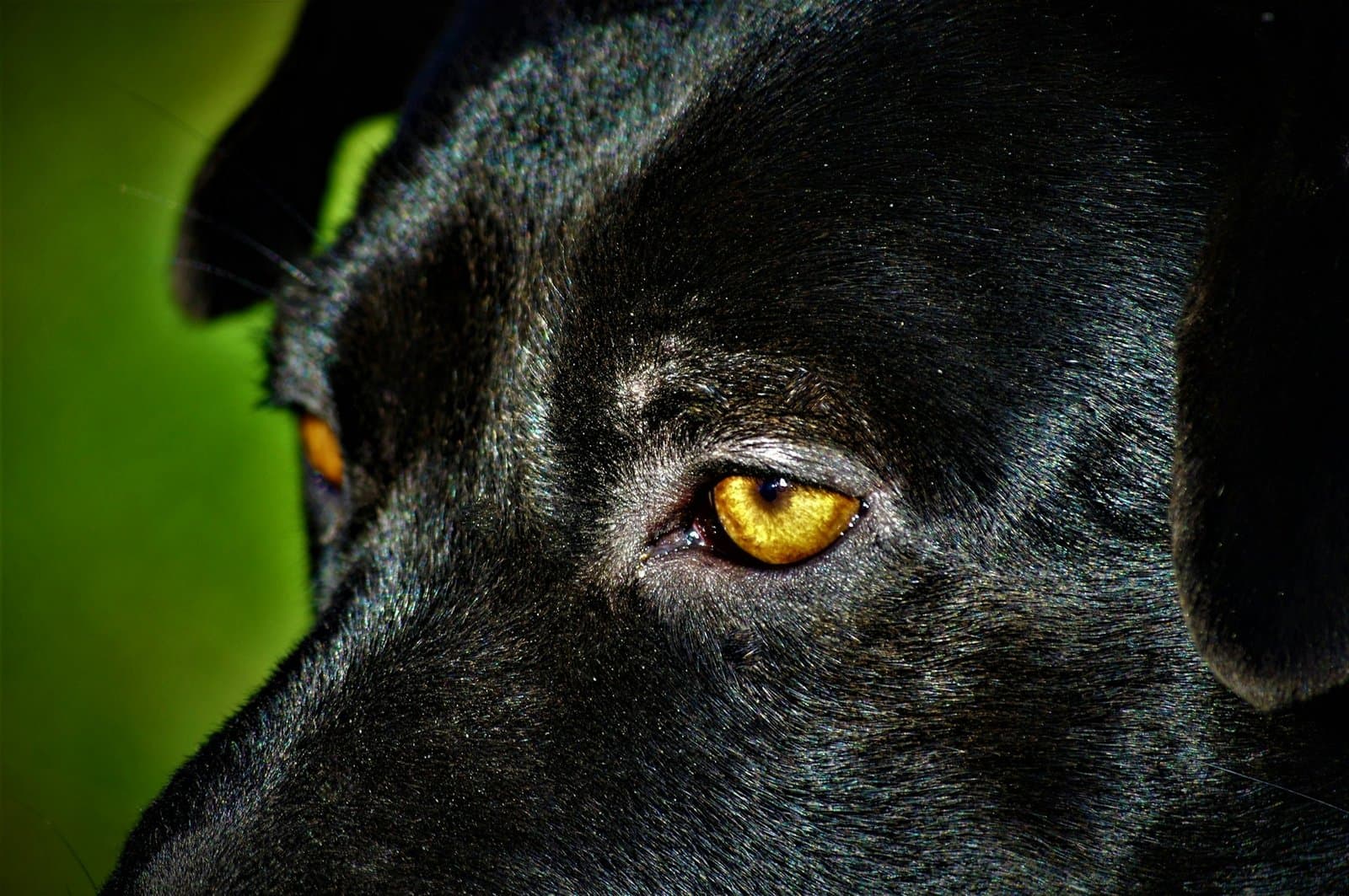
Only Then: Consider the Eyes
Now look at the eyes.
Eyes in dogs are important, but they’re not the first emotional indicator.
Hard staring combined with a stiff tail and tight mouth? That’s tension.
Soft eyes combined with a relaxed body and loose tail? That’s comfort.
Whale eye (seeing the whites) with pinned ears and a tucked tail? That’s anxiety.
The eyes confirm what the body is already saying.
They rarely tell the whole story on their own.
Why This Matters
Misreading body language leads to:
Reacting too quickly
Punishing stress signals
Missing early warning signs
Escalating situations unintentionally
For example, if you only see “wide eyes” and assume excitement, but the tail is stiff and the mouth is tight, you might ignore signs of discomfort.
By the time the growl happens, you’ve missed three earlier signals.
Dogs almost always communicate before they react.
But you have to look in the right order.
Think “Whole Dog,” Not “Facial Expression”
Instead of asking:
“What are their eyes telling me?”
Ask:
“What is their entire body communicating?”
Tail → Mouth → Ears → Eyes.
When you shift your focus away from the eyes first, you begin to read your dog more accurately — and respond more appropriately.

The Bigger Picture
Understanding your dog’s body language strengthens everything:
Training becomes clearer.
Social situations become safer.
Trust deepens.
Reactivity decreases.
When your dog realises you’re responding appropriately to their communication, they relax.
Because they feel understood.
And being understood is one of the foundations of a strong relationship.